📋 Planning Your Automation Project: Strategic Implementation Framework
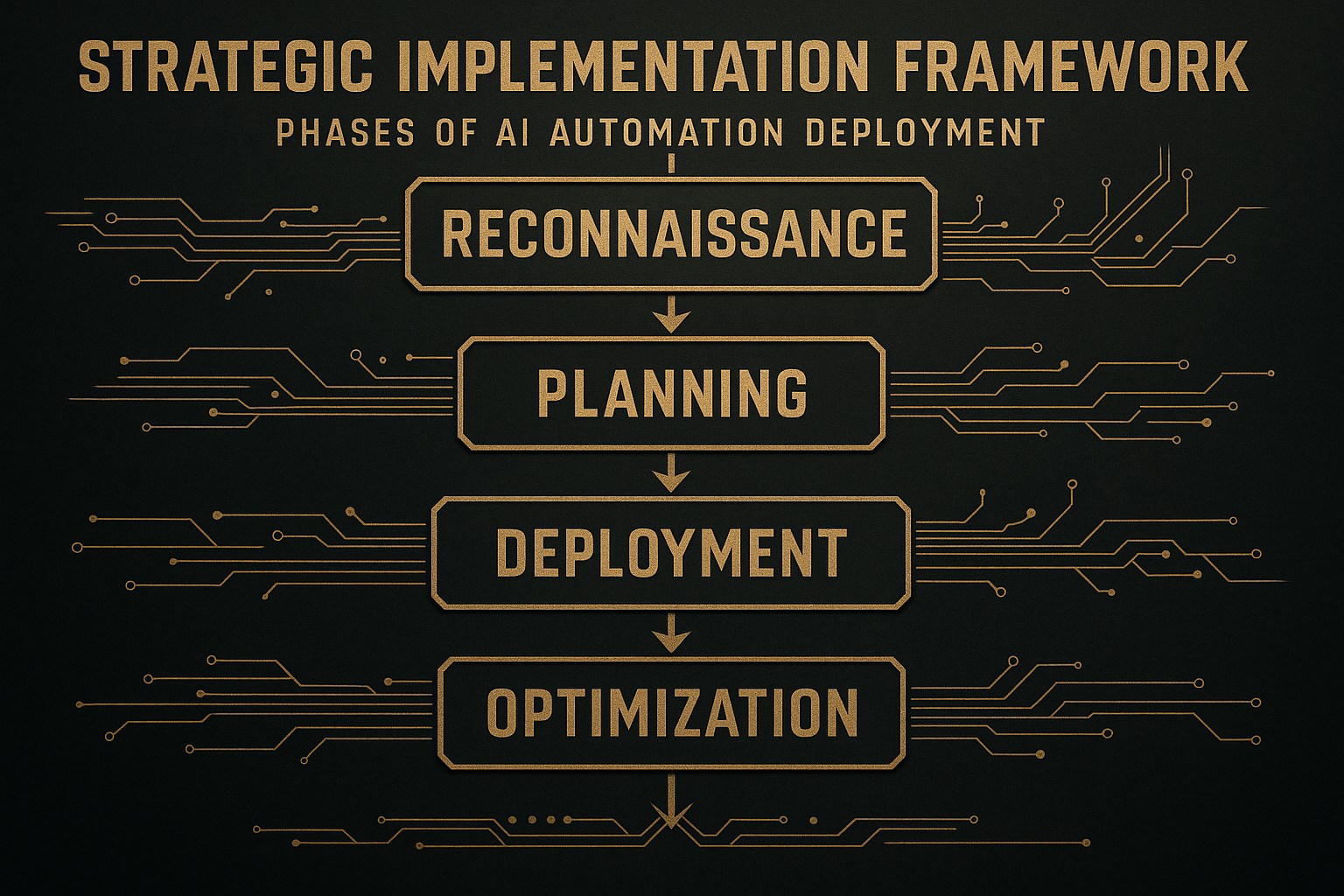
🎯 Military-Grade Planning for Automation Success
Successful automation implementation requires meticulous planning, strategic thinking, and systematic execution. Like military operations, automation projects succeed through careful preparation, clear objectives, and disciplined execution of well-defined strategies.
Organizations that follow structured planning methodologies achieve 85% higher success rates and 40% faster implementation timelines compared to ad-hoc approaches.
📊 The Strategic Planning Framework
🎯 Mission Definition and Objective Setting
Business Case Development
Every automation project must begin with a clear business case that articulates the strategic rationale, expected benefits, and resource requirements for successful implementation.
Business Case Components:
•Current state analysis and pain point identification
•Quantified benefits and ROI projections
•Risk assessment and mitigation strategies
•Resource requirements and timeline estimates
•Success metrics and measurement frameworks
Strategic Alignment Assessment
Ensure automation initiatives align with broader organizational strategy, competitive positioning, and long-term business objectives.
Alignment Considerations:
•Strategic business objectives and priorities
•Competitive differentiation opportunities
•Operational excellence and efficiency goals
•Customer experience improvement targets
•Technology modernization and digital transformation plans
🔍 Current State Assessment
Process Analysis and Documentation
Comprehensive analysis of existing processes provides the foundation for effective automation design and implementation.
Process Assessment Framework:
•End-to-end process mapping and workflow documentation
•Performance measurement and baseline establishment
•Bottleneck identification and constraint analysis
•Quality assessment and error rate documentation
•Resource utilization and cost analysis
Technology Infrastructure Evaluation
Assess current technology capabilities, integration requirements, and infrastructure readiness for automation implementation.
Infrastructure Assessment Areas:
•System integration capabilities and API availability
•Data quality, accessibility, and governance frameworks
•Network infrastructure and security requirements
•Cloud readiness and scalability considerations
•Existing automation tools and platform compatibility
🎯 Project Planning Methodology
📅 Phase-Based Implementation Approach
Phase 1: Discovery and Analysis (Weeks 1-4)
Comprehensive discovery phase establishes project foundation through detailed analysis of current state, requirements gathering, and solution design.
Discovery Activities:
•Stakeholder interviews and requirements gathering
•Process observation and workflow analysis
•System integration assessment and technical review
•Risk identification and mitigation planning
•Success criteria definition and measurement framework
Phase 2: Design and Development (Weeks 5-12)
Solution design and development phase creates automation workflows, integrates systems, and builds necessary infrastructure for implementation.
Design and Development Tasks:
•Automation workflow design and configuration
•System integration and API development
•User interface design and user experience optimization
•Testing framework development and validation procedures
•Training material creation and change management planning
Phase 3: Testing and Validation (Weeks 13-16)
Comprehensive testing ensures automation solutions meet requirements, perform reliably, and integrate effectively with existing systems.
Testing and Validation Components:
•Unit testing of individual automation components
•Integration testing across connected systems
•User acceptance testing with business stakeholders
•Performance testing under realistic load conditions
•Security testing and vulnerability assessment
Phase 4: Deployment and Rollout (Weeks 17-20)
Controlled deployment ensures smooth transition from manual to automated processes while minimizing disruption to business operations.
Deployment Strategy:
•Phased rollout with pilot user groups
•Production deployment with monitoring and support
•User training and adoption support programs
•Performance monitoring and optimization
•Issue resolution and continuous improvement
🎯 Success Metrics and KPI Framework
Operational Performance Metrics
Establish clear metrics to measure automation impact on operational efficiency, quality, and cost reduction.
Key Performance Indicators:
•Process cycle time reduction and throughput improvement
•Error rate reduction and quality improvement
•Cost savings and resource optimization
•User productivity and satisfaction metrics
•System availability and performance statistics
Business Impact Measurement
Track broader business impact including customer satisfaction, competitive positioning, and strategic objective achievement.
Business Impact Metrics:
•Customer satisfaction and experience improvements
•Revenue impact and market share changes
•Competitive advantage and differentiation measures
•Employee satisfaction and retention rates
•Innovation capacity and time-to-market improvements
🛠️ Resource Planning and Management
👥 Team Structure and Roles
Project Leadership and Governance
Establish clear leadership structure with defined roles, responsibilities, and decision-making authority for automation project success.
Leadership Roles:
•Executive Sponsor: Provides strategic direction and removes organizational barriers
•Project Manager: Manages timeline, resources, and stakeholder communication
•Business Process Owner: Ensures automation meets business requirements
•Technical Lead: Oversees technical implementation and system integration
•Change Management Lead: Manages organizational change and user adoption
Cross-Functional Team Composition
Build diverse teams with necessary skills and expertise to address all aspects of automation implementation.
Team Composition:
•Business analysts for process analysis and requirements definition
•Technical architects for system design and integration
•Automation developers for workflow creation and configuration
•Quality assurance specialists for testing and validation
•Training specialists for user education and adoption support
💰 Budget Planning and Resource Allocation
Comprehensive Cost Estimation
Develop detailed cost estimates that include all aspects of automation implementation from initial planning through ongoing operations.
Cost Categories:
•Software licensing and platform costs
•Professional services and implementation support
•Internal resource allocation and opportunity costs
•Training and change management expenses
•Ongoing maintenance and support costs
ROI Modeling and Financial Justification
Create detailed financial models that demonstrate expected return on investment and justify automation project funding.
Financial Modeling Components:
•Baseline cost analysis and current state expenses
•Automation implementation costs and timeline
•Expected benefits quantification and realization schedule
•Risk-adjusted ROI calculations and sensitivity analysis
•Payback period and net present value calculations
🎯 Risk Management and Mitigation
⚠️ Common Automation Project Risks
Technical Implementation Risks
Identify and plan for technical risks that could impact automation project success including integration challenges, performance issues, and security vulnerabilities.
Technical Risk Categories:
•System integration complexity and compatibility issues
•Data quality and availability challenges
•Performance and scalability limitations
•Security vulnerabilities and compliance concerns
•Technology obsolescence and vendor dependencies
Organizational Change Risks
Address organizational risks including user resistance, skill gaps, and change management challenges that could undermine automation adoption.
Organizational Risk Factors:
•User resistance and adoption challenges
•Skill gaps and training requirements
•Process change and workflow disruption
•Communication and stakeholder alignment issues
•Cultural barriers to automation acceptance
🛡️ Risk Mitigation Strategies
Proactive Risk Management
Implement proactive risk management strategies that identify potential issues early and provide clear mitigation approaches.
Risk Mitigation Approaches:
•Comprehensive testing and validation procedures
•Phased implementation with rollback capabilities
•Extensive user training and support programs
•Clear communication and change management strategies
•Contingency planning for critical failure scenarios
Continuous Monitoring and Adjustment
Establish ongoing monitoring and adjustment processes to identify and address emerging risks throughout the automation project lifecycle.
📊 Project Planning Tools and Templates
📋 Planning Documentation Templates
Project Charter Template
Comprehensive project charter template that defines project scope, objectives, success criteria, and governance structure.
Project Charter Components:
•Project overview and business justification
•Scope definition and deliverable specifications
•Success criteria and measurement frameworks
•Resource requirements and budget allocation
•Timeline and milestone definitions
•Risk assessment and mitigation strategies
Requirements Gathering Framework
Structured framework for gathering, documenting, and validating automation requirements from business stakeholders.
Requirements Categories:
•Functional requirements for automation capabilities
•Non-functional requirements for performance and security
•Integration requirements for system connectivity
•User experience requirements for interface design
•Compliance requirements for regulatory adherence
📈 Project Tracking and Monitoring Tools
Progress Tracking Dashboard
Visual dashboard for tracking project progress, milestone achievement, and resource utilization throughout implementation.
Dashboard Components:
•Timeline and milestone tracking with status indicators
•Budget utilization and cost tracking
•Resource allocation and capacity management
•Risk register and mitigation status
•Quality metrics and testing progress
Stakeholder Communication Framework
Structured communication framework that ensures consistent, timely information sharing with all project stakeholders.
Communication Elements:
•Regular status reports and progress updates
•Milestone achievement notifications
•Risk and issue escalation procedures
•Change request and approval processes
•Training and adoption progress tracking
🚀 Getting Started with Your Automation Project
📊 Free Project Planning Assessment
Evaluate your automation project readiness with our comprehensive planning assessment designed to identify potential challenges and optimization opportunities.
Planning Assessment Includes:
•Project scope and complexity analysis
•Resource requirement estimation and availability assessment
•Risk identification and mitigation planning
•Timeline development and milestone definition
•Success criteria establishment and measurement framework
Start Project Planning Assessment →
📚 Project Planning Resources
Access our complete library of project planning resources including templates, frameworks, and best practice guides.
Available Resources:
•Comprehensive project planning toolkit with templates
•Risk management framework and mitigation strategies
•Stakeholder communication and change management guides
•ROI calculation and financial modeling templates
•Project tracking and monitoring dashboard templates
Get Project Planning Resources →
📞 Expert Project Planning Consulting
AutomateNexus provides military-grade project planning and implementation support for organizations pursuing automation excellence.
Our project planning expertise includes:
•Comprehensive project scoping and requirements analysis
•Detailed implementation planning and resource allocation
•Risk management and mitigation strategy development
•Stakeholder alignment and change management support
•Ongoing project monitoring and optimization
Project Planning Services:
•Strategic automation roadmap development
•Detailed project planning and timeline creation
•Resource requirement analysis and team structure design
•Risk assessment and mitigation planning
•Success metrics definition and measurement framework
Schedule your project planning consultation:
•Website: automatenexus.com
•Email: hello@automatenexus.com
•Phone: [Your Phone Number]
Ready to plan your automation project for success? Download our complete Project Planning Arsenal with templates, frameworks, and implementation guides.